Angi Cost Estimates vs. Real 2026 Pricing: Windows, Flooring, Additions & Patios
Angi says windows cost $300–$2,500 each and additions run $80–$500 per sq ft. We checked their published 2026 estimates against regional contractor pricing for four projects — here's where the numbers hold up, where they skew, and what to actually budget.
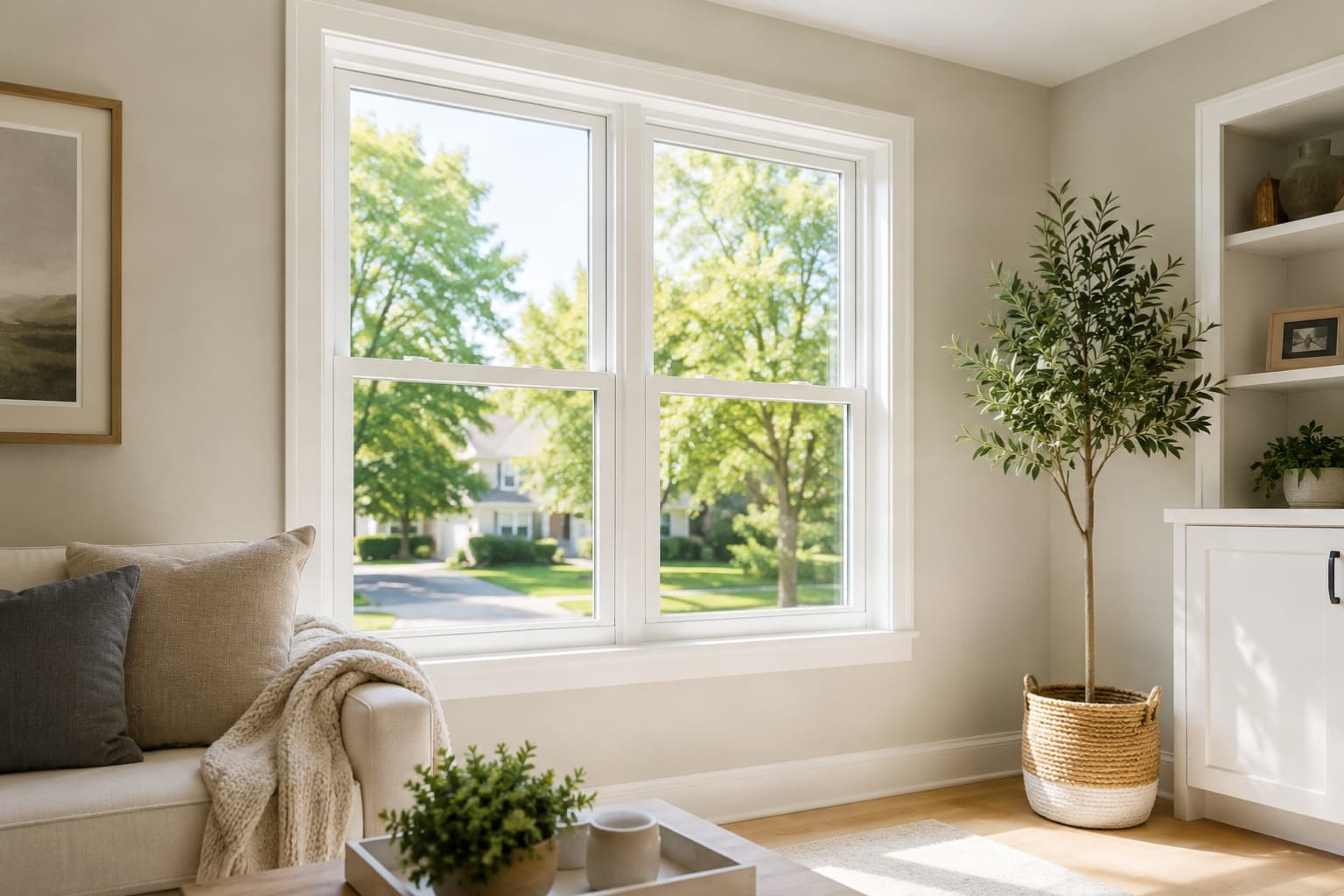
If you've researched a home project recently, you've probably landed on one of Angi's cost guides. They're everywhere in search results, and for good reason — Angi sits on an enormous pile of project data, and their guides are a reasonable first stop.
But there's a structural problem with any national cost guide: the ranges are so wide they can't tell you what your project will cost. "Windows cost $300 to $2,500 each" is technically true and almost useless for budgeting. The low end is a builder-grade vinyl window in a low-cost market; the high end is a custom wood-clad unit in San Francisco. You're probably neither.
So we did the comparison directly. Below are Angi's published 2026 figures for four common projects, side by side with our regional contractor pricing data — and an honest assessment of where their numbers hold up, where they skew, and what a realistic budget looks like.
BuildCost is independent and has no affiliation with Angi. Their figures below are quoted from their published 2026 cost guides, linked in each section.
Window Replacement: Angi's Average Skews High for Standard Jobs
What Angi says: $300–$2,500 per window installed, with an average of $750 per window, per Angi's window replacement guide. Labor alone: $100–$300 per window.
What regional pricing shows: For a standard vinyl replacement window, installed, our state-level data runs:
| Low | Mid | High | |
|---|---|---|---|
| Southeast | $280 | $490 | $820 |
| Midwest / Southwest | $300 | $510–$520 | $840–$860 |
| Northeast | $350 | $600 | $1,000 |
| West | $380 | $660 | $1,100 |
The verdict: Angi's $750-per-window average runs 15–35% above what most homeowners pay for a standard vinyl replacement. That's not because the number is wrong — it's because their average blends in premium wood, fiberglass, and specialty windows, which cost two to four times as much as vinyl. If you're replacing 10 standard windows, budgeting off Angi's average would have you expecting $7,500; in most of the country, mid-grade bids will come in around $4,900–$6,600.
Their $2,500 top end is real, but it describes a different product than what 80% of replacement jobs install. See our window replacement cost guide for your state's range.
Flooring: The Average Hides a Material Split
What Angi says: About $12.50 per square foot on average, with a range of $3–$22, per Angi's flooring installation guide. For hardwood specifically, $6–$25 per square foot installed.
What regional pricing shows: Installed flooring in our data runs $4–$17 per square foot across all materials and regions, with most projects landing at $7–$10 per square foot mid-grade.
The verdict: Angi's $12.50 average sits noticeably above the middle of their own range, because it's pulled up by tile and hardwood jobs. If you're installing LVP or laminate — the most common choice in 2026 — a realistic installed budget is $4–$8 per square foot, roughly half of Angi's headline average. A 500 sq ft LVP job in the Midwest prices out around $3,750 at mid-grade, not $6,250.
Their hardwood range ($6–$25) is fair; hardwood genuinely is that variable. The takeaway is to budget by material, never by the all-flooring average. Our flooring cost guide breaks it out by state.
Home Additions: The $80/Sq Ft Floor Is a Mirage
What Angi says: $80–$200 per square foot building out, $300–$500 per square foot building up, with typical projects totaling $21,903–$83,356, per Angi's home addition guide.
What regional pricing shows: Our 2026 state-level data puts ground-level additions at:
| Low | Mid | High | |
|---|---|---|---|
| Southeast | $130 | $200 | $310 |
| Midwest / Southwest | $140 | $210 | $325 |
| Northeast | $175 | $250 | $380 |
| West | $190 | $280 | $420 |
The verdict: This is the comparison where the gap matters most. Angi's $80-per-square-foot floor sits well below the bottom of our data in every region — even the lowest-cost Southeast markets bottom out around $130 in 2026. An $80 number might describe an unfinished bump-out shell or pre-2021 pricing, but if you budget a 200 sq ft addition at $16,000, the first real bid is going to be a shock. A realistic 2026 mid-range budget for that project is $40,000–$56,000 depending on region.
Their overall project range ($22K–$83K) is consistent with our data — it's the per-square-foot floor that misleads. We publish the full breakdown in our 2026 Home Addition Cost Index and the home addition cost guide.
Concrete Patios: Angi's Numbers Hold Up
What Angi says: $4–$30 per square foot, with an average project at $3,552 (typical range $800–$10,000), per Angi's concrete patio guide. A standard 4-inch pour runs about $10 per square foot.
What regional pricing shows: Our data runs $6–$28 per square foot across regions, with mid-grade work at $11–$16. A typical 250 sq ft patio prices out at $2,800–$4,000 mid-grade.
The verdict: Credit where it's due — Angi's patio figures are solid. Their $3,552 average lands inside our mid-grade range for a typical patio, and their $10/sq ft figure for a standard pour matches the low-mid boundary in most regions. The one caveat: the $4/sq ft bottom of their range describes plain broom-finish concrete in a cheap market with easy access. Stamped or stained finishes, which most homeowners end up choosing, push toward $15–$28. State-by-state ranges are in our concrete patio cost guide.
Skip the National Averages
National ranges are where budgeting starts, not where it ends. Get a free estimate calibrated to your project size and your state's 2026 labor rates — no sign-up.
Get My Estimate →Why National Cost Guides Run Wide
None of this means Angi is doing anything wrong. Every national cost guide — theirs, Forbes', Home Depot's — faces the same math problem:
- They aggregate every material grade into one range. A range that covers builder-grade vinyl and custom wood-clad windows is honest, but it spans 8x and tells you nothing about your job.
- They average across markets that differ by 30–50%. Labor in coastal metros costs up to half again as much as the same crew-hours in the rural Midwest. A national average is, by definition, wrong almost everywhere.
- Averages lag. Large datasets smooth over recent movement in materials and labor. In a year with tariff-driven material increases, that lag shows up as optimistic floors — exactly what we see in the $80/sq ft addition number.
How to Actually Use These Numbers
A practical sequence that avoids both over- and under-budgeting:
- Start with a regional, size-specific estimate — not a national range. That's what our calculator is built for: your project type, your square footage, your state.
- Sanity-check against the big guides. If Angi's range and your localized estimate overlap, you have a credible budget bracket.
- Then get three real bids. No published number — ours included — replaces competitive quotes from licensed local contractors. Use the estimate to spot bids that are suspiciously high or suspiciously low.
The most expensive budgeting mistake isn't picking the wrong cost guide. It's anchoring on the bottom of a national range, then discovering your market and your spec live near the top of it.
Founder of BuildCost. Combines hands-on construction and trades experience with years of managing his own home renovation projects and a data and research background that drives how BuildCost aggregates and regionalizes cost data.
More about Michael →