Tariffs, Oil, and Your Building Budget: Why Locking in Estimates Early Matters in 2026
Recent tariffs and tensions in the Middle East are nudging building material prices upward. Here's a practical look at what's affected, and why getting your project estimate now — and buying materials sooner — can pay off.
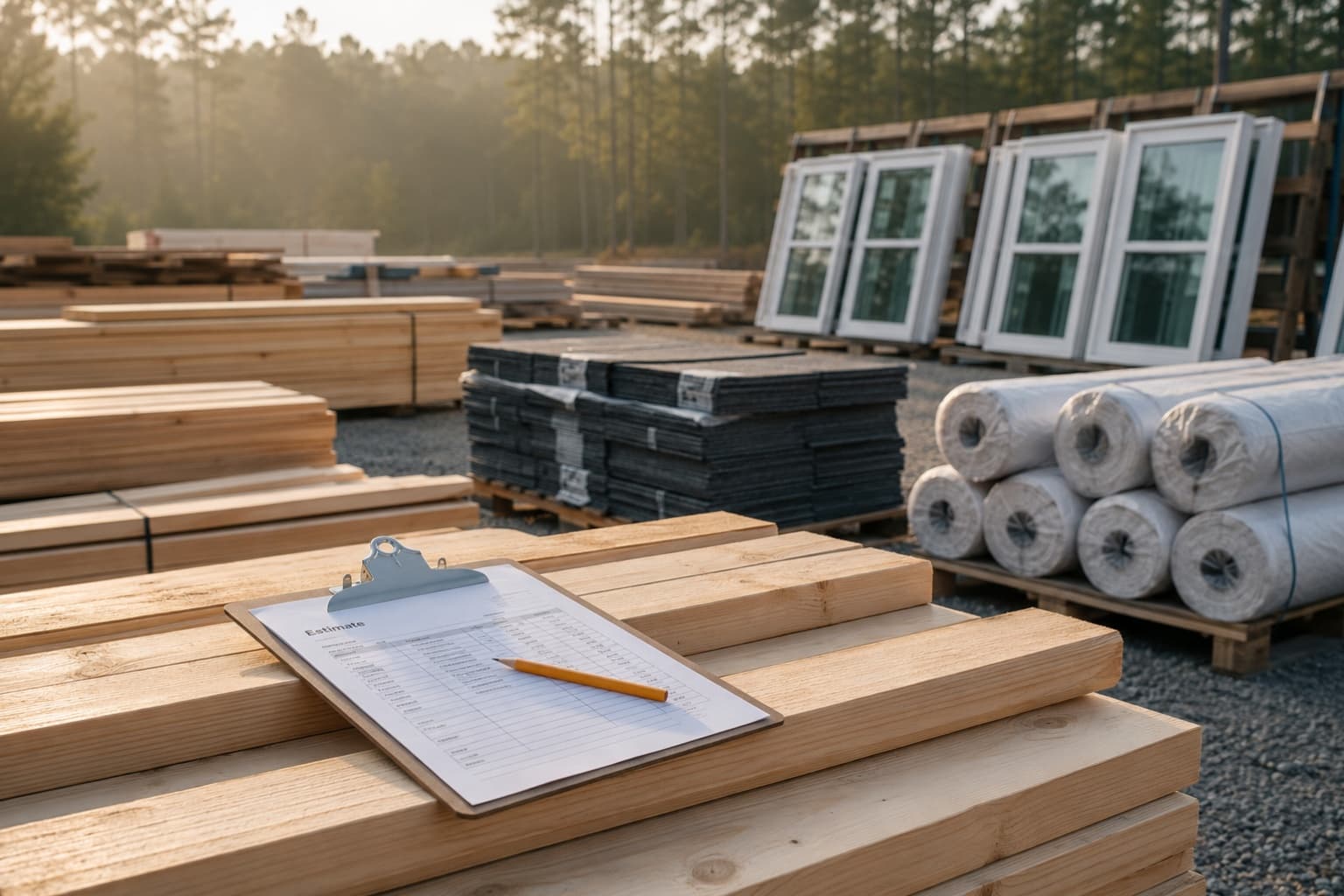
If you've talked to a contractor in the past few weeks, you may have heard the phrase "prices are moving." That's not pressure tactics — material costs really are shifting in 2026, driven by two storylines that have nothing to do with construction: new tariffs on imported metals and lumber, and energy market volatility tied to the situation in Iran.
The good news: this isn't a repeat of the 2021 lumber spike. Most categories are seeing measured single-digit increases, not panic-buying. The practical takeaway: homeowners with a project on deck this year benefit from getting an estimate locked in early — and, in some cases, from buying materials sooner rather than later.
This guide walks through what's actually moving, which projects are most exposed, and how to plan around it without overreacting.
Lock in Your Estimate Before Prices Move
Get a free, instant cost range for your project using current 2026 pricing — so you know exactly what to budget before you start shopping for contractors.
Get My Estimate →What's Actually Changing
Two separate pressures are working on building material costs right now:
1. Tariff adjustments on imported materials. New duties on steel, aluminum, and softwood lumber raise the landed cost of those materials in the U.S. — and because domestic producers compete with imports, domestic prices tend to follow upward as well.
2. Energy market volatility. Tensions involving Iran have pushed crude oil prices higher and more uncertain. That ripples into anything petroleum-based: asphalt shingles, PVC pipe, vinyl siding, insulation foam, and the diesel that moves all of it to job sites.
Neither of these is forecast to be a short, sharp shock. They're more like a steady tailwind on prices — small monthly increases that add up over a year. That's actually easier to plan around than a 2021-style spike, if you start the planning now.
Which Materials Are Most Exposed
Not every project sees the same pressure. Here's how the major categories sort out:
| Material | Exposure | What's Driving It |
|---|---|---|
| Steel (rebar, beams, fasteners) | High | Tariffs + global demand |
| Aluminum (windows, gutters, siding trim) | High | Tariffs |
| Softwood lumber | Moderate–High | Tariffs + supply tightness |
| Copper (wiring, plumbing) | Moderate | Global demand, weaker tariff impact |
| Asphalt shingles | Moderate | Crude oil pricing |
| Vinyl siding, PVC pipe | Moderate | Crude oil pricing |
| Insulation (foam-based) | Moderate | Crude oil pricing |
| Drywall, concrete, fiber cement | Low | Mostly domestic, energy-sensitive but stable |
| Tile, natural stone | Low | Already-priced inventory channels |
If your project is dominated by drywall, concrete, paint, and tile, you're relatively insulated. If it leans on steel framing, metal roofing, vinyl siding, or asphalt shingles, you're more exposed.
What This Means by Project Type
A rough sketch of how a few common projects are sitting in mid-2026:
Roof replacement — Asphalt shingles are seeing 4–8% upward pressure since the start of the year. Metal roofing is up more, in the 8–12% range. If your roof has another 2–3 years left, you can probably wait. If it's already at end-of-life, locking in a quote this season makes sense.
Kitchen remodel — The cabinet and countertop side is relatively stable. Appliances are mixed — Asian-made appliances are seeing tariff pressure, North American brands less so. Plumbing fittings (copper, brass) are up modestly.
Decks and outdoor structures — Softwood lumber and composite decking are both up. Pressure-treated lumber for framing is sensitive to softwood lumber tariffs; composite decking is sensitive to petroleum costs. Plan for 5–10% higher than 2025 quotes.
HVAC replacement — Equipment costs are relatively stable. Copper line-set costs are up modestly. Total job impact is small.
Additions and new construction — These are the most exposed projects, because they're a basket of everything: framing lumber, steel fasteners, sheathing, roofing, siding, windows, copper plumbing, electrical wire. Even modest movement in each category adds up.
Why Getting an Estimate Now Matters More Than Usual
In a flat market, the value of an estimate is mostly about deciding whether to do the project at all. In a slowly rising market, the estimate also becomes a planning anchor — a number you can lock contractors and material orders against.
A few practical reasons to get an estimate early in 2026:
- Contractor quotes have shorter shelf lives. Many GCs are now writing quotes with 30–60 day price-validity windows instead of the 90–120 days that were common a few years ago. Knowing your budget number before you start collecting quotes saves time.
- Material lead times are stretching. Windows, cabinets, and specialty appliances are running 8–14 weeks in many markets. The sooner the order goes in, the sooner the price is fixed.
- Lender pre-approvals key off cost estimates. If you're financing with a HELOC or renovation loan, lenders will want a defensible cost figure. A documented estimate gets that conversation moving.
Get a Local Cost Range in Under a Minute
Pick your project, enter your state and size, and see current 2026 pricing for low, mid, and premium tiers. Free, no signup.
Start My Estimate →Buying Materials Early: When It's Smart, When It's Not
A reasonable next question: should you buy materials now and store them? Sometimes yes, sometimes no. Here's how to think about it:
Buying early often makes sense for:
- Long-lead items you've already specified. Windows, doors, cabinets, and tile that you've committed to in writing — order them as soon as the design is set. You're not speculating; you're locking in something you'll definitely use.
- Bulk materials with a clear use date. If your deck build starts in 8 weeks and you have dry, covered storage, ordering pressure-treated lumber now is a low-risk hedge.
- Appliances with model-year transitions. Current-year appliance models are often discounted in late spring before fall model changes. Combined with rising tariff exposure, this can be a real saving.
Buying early rarely makes sense for:
- Perishable or storage-sensitive materials. Drywall, untreated lumber, and adhesives all degrade in poor storage. The cost of damage usually exceeds the price hedge.
- Items you haven't fully specified. Buying tile or fixtures before the design is finalized leads to returns, wrong quantities, or living with the wrong choice. Don't rush the decision to beat a price increase.
- Materials with significant warranty windows. Roofing materials, in particular, sometimes have warranty clocks that start at delivery. Storing shingles for six months can eat into the warranty.
The simple rule: if you'd order the material in the next 60 days anyway and you have a place to store it, accelerating that order is usually a small, reasonable hedge. Beyond 60 days, you're speculating — and price predictions, even good ones, are not free.
A Practical Checklist for 2026 Projects
If you have a project planned for this year or next, here's a sensible sequence:
- Get a baseline estimate now, even if you're not ready to start. Knowing the number unblocks every conversation that comes after.
- Collect quotes within a 4–6 week window so they're all priced against the same market.
- Ask each contractor about their price-validity window — and whether they'll lock material costs if you sign promptly.
- Prioritize ordering long-lead specified items (windows, cabinets, custom doors, appliances) as soon as design is final.
- Don't pre-buy materials you haven't specified. Price hedging only works when you actually want what you bought.
- Build a 10–15% contingency into your budget, not 5%. The base estimate should already reflect today's prices; the contingency covers month-over-month drift and on-site surprises.
Already Have a Quote? Check It Against Local Pricing
BuildCost's Quote Checker compares a contractor's price to current 2026 averages for your state — so you know if you're paying fair-market or above.
Check My Quote →The Bottom Line
The current environment isn't a crisis — it's a slow, steady drift upward, driven by two factors that affect almost everyone planning a project this year. Homeowners who quietly do the planning work now — getting estimates, finalizing designs, ordering long-lead items — will end up with smoother projects and tighter budgets than those who wait and react.
Construction has always rewarded the prepared homeowner. In a year like 2026, it rewards them a little more than usual.
Frequently Asked Questions
Are building material prices going to keep rising in 2026? The consensus across material category forecasts is for continued modest upward pressure through at least mid-2026, driven by tariff policy and energy costs. Most categories are projected to rise in single digits — not the double-digit spikes of 2021. The direction is reasonably predictable; the magnitude is not.
Which materials are most affected by current tariffs? Steel, aluminum, and softwood lumber are the most directly exposed to current tariff policy. Petroleum-derived materials — asphalt shingles, vinyl siding, PVC pipe, foam insulation — are exposed to crude oil pricing, which is sensitive to Middle East tensions.
Should I delay my project until prices come back down? For most categories, the more likely outcome is gradual increase or sideways drift — not a return to 2024 prices. Delaying a project that's otherwise ready usually just means paying next year's prices instead of this year's. The exception is projects that aren't urgent and where you have a clear non-construction reason to wait.
Is it safe to buy materials now and store them? For long-lead, fully-specified items in good storage conditions — yes, often a smart hedge. For materials that degrade, lose warranty time, or haven't been finalized in your design — no, the risk usually outweighs the savings.
How accurate are construction estimates in a moving market? A good estimate reflects today's prices and a reasonable contingency for the project's expected timeline. BuildCost estimates are based on current 2026 regional pricing data, so they're a fair starting point. For any project starting more than 60 days out, build in a 10–15% contingency rather than the usual 5–10%.
What's the single biggest budgeting mistake homeowners make in a market like this? Treating an old estimate as still valid. A quote from six months ago is a historical document, not a budget. Anyone planning a 2026 project should be working from numbers no older than 30–60 days, and refreshing them before signing contracts.
Founder of BuildCost. Combines hands-on construction and trades experience with years of managing his own home renovation projects and a data and research background that drives how BuildCost aggregates and regionalizes cost data.
More about Michael →