Kitchen Remodel Cost Guide: What Homeowners Should Budget For
Find out how much a kitchen remodel costs in 2026 — from a minor refresh to a full gut renovation. Includes cost breakdowns by scope, component, and what actually moves the budget.
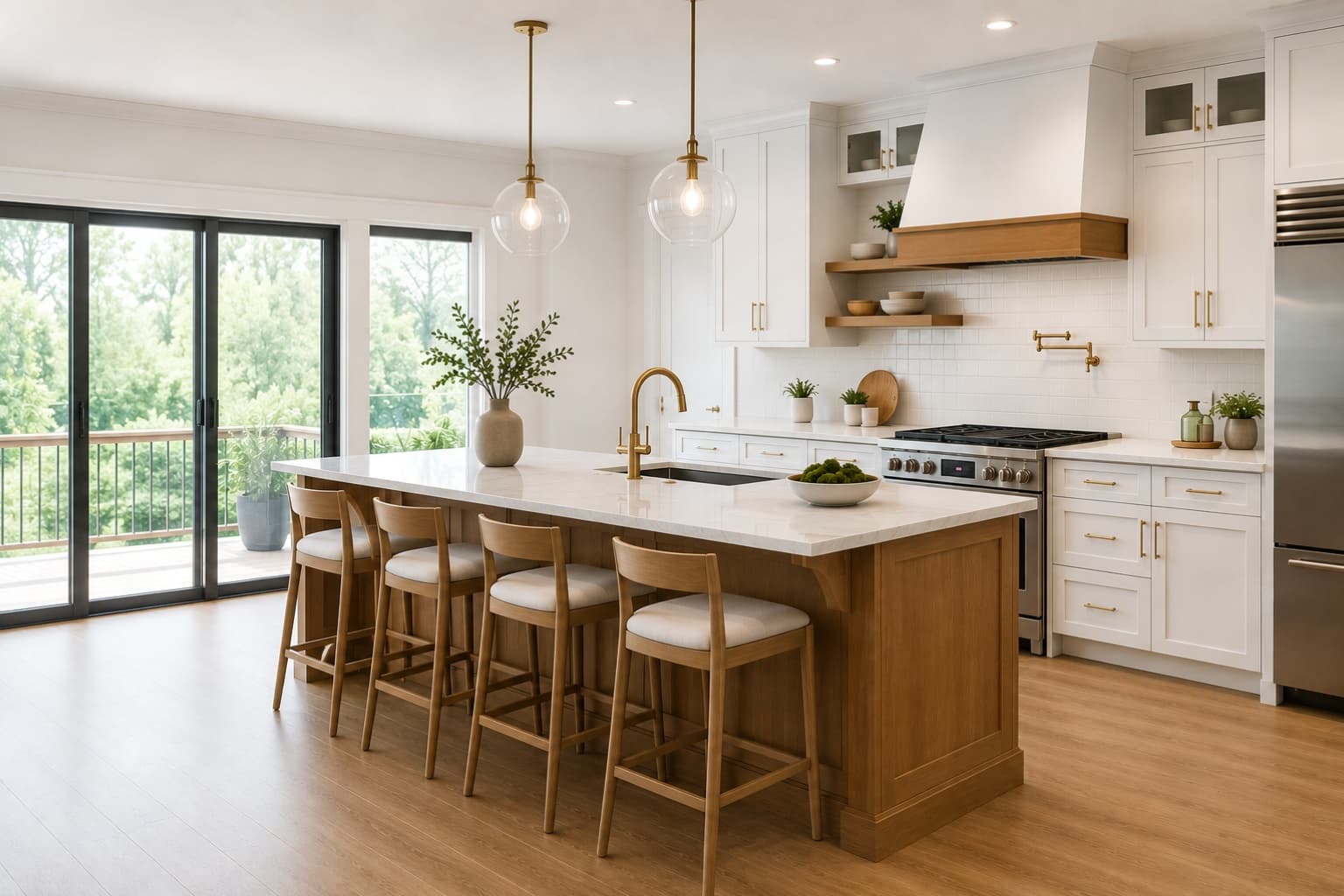
Kitchen remodel costs range from $5,000 for a cosmetic refresh to $150,000 or more for a full luxury renovation. That's a massive range — and it exists because the kitchen is the single most complex room in your home to renovate. Cabinets, countertops, appliances, plumbing, electrical, and flooring all intersect in one space.
This guide breaks down exactly where the money goes, which decisions move the needle most, and what surprises catch homeowners off guard once demo starts.
Get a Free Kitchen Remodel Estimate
Answer a few questions about your kitchen and get an instant cost range with local pricing for your state.
Estimate My Kitchen →Average Kitchen Remodel Costs
| Project Scope | Typical Cost Range |
|---|---|
| Cosmetic refresh (paint, hardware, lighting) | $3,000–$8,000 |
| Minor remodel (resurfaced cabinets, new countertops) | $8,000–$20,000 |
| Mid-range remodel (new cabinets, countertops, appliances) | $20,000–$50,000 |
| Major remodel (full gut, layout changes) | $50,000–$100,000 |
| Luxury remodel (custom everything, high-end finishes) | $100,000–$150,000+ |
The national average for a full mid-range kitchen remodel sits around $25,000–$40,000. Your actual cost depends on kitchen size, material choices, whether the layout is changing, and local labor rates.
Cost by Kitchen Size
Square footage is one of the strongest predictors of cost — more cabinets, more countertop, more flooring, more everything.
| Kitchen Size | Sq Ft | Typical Full Remodel Cost |
|---|---|---|
| Small galley or apartment kitchen | Under 100 sq ft | $10,000–$25,000 |
| Standard kitchen | 100–200 sq ft | $20,000–$50,000 |
| Large open-concept kitchen | 200–300 sq ft | $40,000–$80,000 |
| Chef's kitchen or great room kitchen | 300+ sq ft | $70,000–$150,000+ |
The Biggest Cost Drivers
Cabinets
Cabinets are typically the largest single line item in a kitchen remodel — often 25–40% of your total budget. What you choose here shapes everything else.
| Cabinet Type | Installed Cost (per linear foot) |
|---|---|
| Stock (off-the-shelf, limited sizes) | $60–$200 |
| Semi-custom (more sizes, finishes) | $100–$650 |
| Custom (built to spec, any size) | $500–$1,500+ |
A 20-linear-foot kitchen with stock cabinets might cost $1,200–$4,000 in materials. The same kitchen in custom cabinets could run $10,000–$30,000 before installation labor.
Refacing vs. replacing: If your cabinet boxes are structurally sound, refacing (new doors, drawer fronts, and veneer) costs $4,000–$12,000 for most kitchens — roughly half the price of full replacement.
Countertops
Countertops are where a lot of homeowners upgrade expectations mid-project. Here's what to budget per square foot, fully installed:
| Material | Installed Cost (per sq ft) |
|---|---|
| Laminate | $20–$50 |
| Butcher block | $40–$100 |
| Granite | $50–$120 |
| Quartz | $70–$150 |
| Quartzite | $80–$180 |
| Marble | $100–$250 |
| Dekton / sintered stone | $90–$200 |
A 40 sq ft countertop at mid-range quartz runs $2,800–$6,000 installed. The same footprint in marble could easily hit $10,000.
Appliances
Appliances are their own budget category. Most homeowners replacing a full set of kitchen appliances spend:
| Appliance Tier | Full Set (range, fridge, dishwasher, microhood) |
|---|---|
| Entry-level | $3,000–$6,000 |
| Mid-range | $6,000–$15,000 |
| Professional/luxury | $15,000–$40,000+ |
Appliances are one place where you can save significantly by purchasing during holiday sales (Black Friday, Memorial Day, Labor Day) or from open-box programs at big-box stores.
Labor
Labor typically accounts for 30–50% of total kitchen remodel cost. Key trades and what to expect:
- General contractor: Adds 15–25% overhead but handles scheduling, permitting, and accountability
- Cabinet installer: $50–$100/hr or $200–$500 per cabinet unit
- Countertop fabricator/installer: Usually included in countertop material quote
- Plumber: $75–$150/hr — moving a sink adds $500–$2,500+ depending on distance
- Electrician: $75–$150/hr — required for new outlets, circuits, under-cabinet lighting
- Tile setter: $5–$15/sq ft for backsplash work
Pro tip: The most expensive single decision in a kitchen remodel is changing the layout. Moving the sink, range, or refrigerator means rerouting plumbing, gas, or ventilation — easily adding $2,000–$10,000 to your budget.
Flooring
Kitchen flooring costs vary widely by material:
| Material | Materials (per sq ft) | Labor (per sq ft) |
|---|---|---|
| Luxury vinyl plank (LVP) | $2–$7 | $2–$5 |
| Ceramic or porcelain tile | $2–$10 | $5–$12 |
| Hardwood | $5–$15 | $4–$10 |
| Natural stone | $8–$20 | $8–$20 |
For a 150 sq ft kitchen, mid-range porcelain tile runs $1,050–$3,300 installed. LVP is a popular budget alternative at $600–$1,800 for the same space.
Not Sure About Your Flooring Budget?
Use the tile calculator to get exact quantities and material costs before you talk to a contractor.
Open Tile Calculator →Backsplash
Backsplash is one of the most visible upgrades in a kitchen and one of the more affordable ways to add character. A standard 30–40 sq ft backsplash typically costs:
- Subway tile (budget): $300–$800 installed
- Patterned or handmade tile (mid-range): $800–$2,500 installed
- Natural stone or specialty tile: $2,000–$5,000+ installed
Labor runs higher when tile is set in complex patterns — herringbone and vertical stacked bond take significantly longer than standard horizontal offset.
Hidden Costs Most Homeowners Overlook
These items rarely show up in early contractor quotes but frequently appear once demo begins:
1. Asbestos and lead paint Homes built before 1980 may have asbestos in floor tiles or lead in the existing paint. Testing runs $200–$400. Abatement adds $1,500–$5,000+ depending on scope.
2. Subfloor damage Moisture from decades of dishwasher and sink use frequently damages the subfloor beneath. Replacing a damaged section costs $300–$800 and adds time to the project.
3. Plumbing surprises Corroded supply lines, outdated drain configurations, or the discovery of galvanized pipe in older homes can add $1,000–$5,000 in unexpected plumbing work.
4. Electrical upgrades Modern kitchens require more circuits than older homes were built for. Bringing the panel up to code for a remodel can add $500–$3,000 depending on your existing panel capacity.
5. Structural walls Removing a wall to open up a kitchen layout often requires a structural engineer ($300–$700) and a properly sized beam — which can add $2,000–$10,000 depending on the span.
6. Ventilation A new range hood that exhausts to the exterior requires a duct run through walls or ceilings. In a two-story home, this can be a significant job — budget $500–$2,000 for the ductwork alone.
What Actually Moves the Budget Up or Down
Keeps costs down:
- Keep the existing layout — don't move the sink, range, or refrigerator
- Choose semi-custom cabinets over custom
- Use quartz over marble or quartzite
- Buy appliances as a package deal
- Handle demo, painting, and cleanup yourself
- Use larger format tile (fewer grout lines = less labor time)
Pushes costs up:
- Changing the kitchen layout (new plumbing runs, gas lines)
- Custom cabinetry to the ceiling
- Waterfall countertop edges or thick mitered slabs
- Professional-grade appliances (36" range, built-in refrigerator)
- Radiant heated flooring ($8–$15/sq ft installed)
- Vaulted or coffered ceiling work during the remodel
Return on Investment
According to the Remodeling Cost vs. Value report, mid-range kitchen remodels return approximately 49–55% of cost at resale. Major upscale remodels return around 38–45%. The best ROI comes from bringing an outdated kitchen up to neighborhood standard — not from over-improving relative to your home's value.
A kitchen that's significantly below the standard of comparable homes in your area is a drag on sale price. Bringing it up to par typically returns more than what you spent. Adding a second island and Wolf appliances to a $350,000 home does not.
Get Your Personalized Estimate
Use BuildCost's free estimator for a detailed cost breakdown with pricing specific to your state.
Start My Estimate →Frequently Asked Questions
How much does a kitchen remodel cost on average? The national average for a full mid-range kitchen remodel is $25,000–$40,000. Minor refreshes start around $5,000–$10,000. Major renovations with custom cabinetry, high-end appliances, and layout changes can reach $100,000–$150,000 or more.
What is the most expensive part of a kitchen remodel? Cabinets are typically the largest line item, representing 25–40% of the total budget. Labor is the next biggest cost, accounting for 30–50% of total project cost depending on scope.
Can I remodel a kitchen for $10,000? Yes, with limited scope. A realistic $10,000 kitchen budget could cover new cabinet fronts and hardware (refacing), new countertops in laminate or entry-level quartz, new faucet and sink, updated lighting, and fresh paint. It won't cover new appliances, flooring, or any plumbing or electrical changes.
How long does a kitchen remodel take? A full gut remodel of a standard kitchen typically takes 6–12 weeks. Cabinet lead times often drive the schedule — semi-custom and custom cabinets can take 6–12 weeks to arrive after ordering. Minor refreshes without cabinet replacement can often be completed in 1–2 weeks.
Do I need permits for a kitchen remodel? Permits are generally required when moving or adding plumbing, adding or modifying electrical circuits, or removing walls. Cosmetic work — new cabinets in existing locations, countertop replacements, flooring, and paint — typically doesn't require permits. Always verify with your local building department before starting work.
Is it worth remodeling a kitchen before selling? It depends on the current condition and your local market. A kitchen that is significantly dated or functionally poor is worth updating before listing — buyers will factor it into offers anyway. A kitchen that is in decent condition but not your style is often better left to the buyer. Over-improving for your neighborhood rarely pays off.
Should I hire a general contractor or manage subcontractors myself? A GC adds 15–25% to your costs but handles scheduling, coordination, and carries liability if something goes wrong. Self-managing subcontractors saves that markup but requires significant time, knowledge, and availability. For remodels over $20,000 or involving plumbing, electrical, and multiple trades, a GC is usually worth it.
Founder of BuildCost. Combines hands-on construction and trades experience with years of managing his own home renovation projects and a data and research background that drives how BuildCost aggregates and regionalizes cost data.
More about Michael →