How to Prepare Your Home for the 2026–27 Super El Niño (Complete Checklist)
NOAA forecasts a historic-strength El Niño for winter 2026–27. Here's what it means for your region and a room-by-room checklist to prepare your roof, windows, drainage, and foundation before storm season peaks.
NOAA's Climate Prediction Center puts the odds at greater than 90% for a very strong El Niño this fall and winter — and a 69% chance it reaches a three-month strength that would exceed every El Niño on record dating back to 1950. It's also expected to stick around: forecasters currently see it persisting through spring 2027 rather than fading after the usual winter peak.
That's a big deal for homeowners, because El Niño winters reliably shift where storms hit and how much rain falls. The good news is that the impact ramps up late — the heaviest rain signal is expected January through March 2027, not this fall — which means there's still a real window to get ahead of it instead of discovering a problem mid-storm.
This guide covers what the forecast actually means region by region, and a practical checklist for the parts of your home most likely to be tested this winter.
What a Strong El Niño Actually Does to US Weather
El Niño works by pushing the jet stream south of its usual track, which drags more storms into the southern half of the country while the north tends to run drier and milder. The strength of the effect varies a lot by region and by how strong the event is.
| Region | Typical El Niño Effect | Confidence |
|---|---|---|
| Gulf Coast (TX to FL) | Wetter than average | High — shows up in over 80% of past El Niño winters |
| Coastal Southeast | Wetter than average, elevated severe-weather risk | High |
| California / Southwest | Highly variable — near-normal in weak/moderate events, but the two strongest El Niños on record (1982–83, 1997–98) both brought major flooding | Uncertain, but this event is forecast to be historically strong |
| Ohio Valley / Tennessee Valley | Drier than average | Moderate |
| Northern Rockies | Drier, less reliable signal | Low |
| Most of the US (temperature) | Warmer than average, Oct–March | High |
The California/Southwest picture is the one worth taking seriously this year specifically: outcomes there normally split roughly a third wet, a third near-normal, a third dry in typical El Niño years — but this isn't a typical year. NOAA's strength forecast puts 2026–27 in the same tier as 1982–83 and 1997–98, both of which caused significant flooding in the state.
Why Prep Now Instead of Waiting
Two practical reasons to act before the winter, not during it:
It's cheaper. A roof repair or a re-caulked window costs a fraction of what you'll pay for emergency tarping, water damage remediation, or mold removal after a leak has been running for a few weeks. Contractors also aren't backed up yet — once storm damage starts hitting a region, roofers and restoration companies book out for weeks.
Standard homeowners insurance doesn't cover flooding. That's a separate policy (NFIP or private flood insurance), and most have a 30-day waiting period before coverage kicks in — meaning if you wait until a storm is in the forecast to buy it, you're too late. If you're in a Gulf Coast, Southeast, or California flood-prone area, this is worth checking now, along with photographing your home's current condition for any future claim.
The Home Prep Checklist
Roof
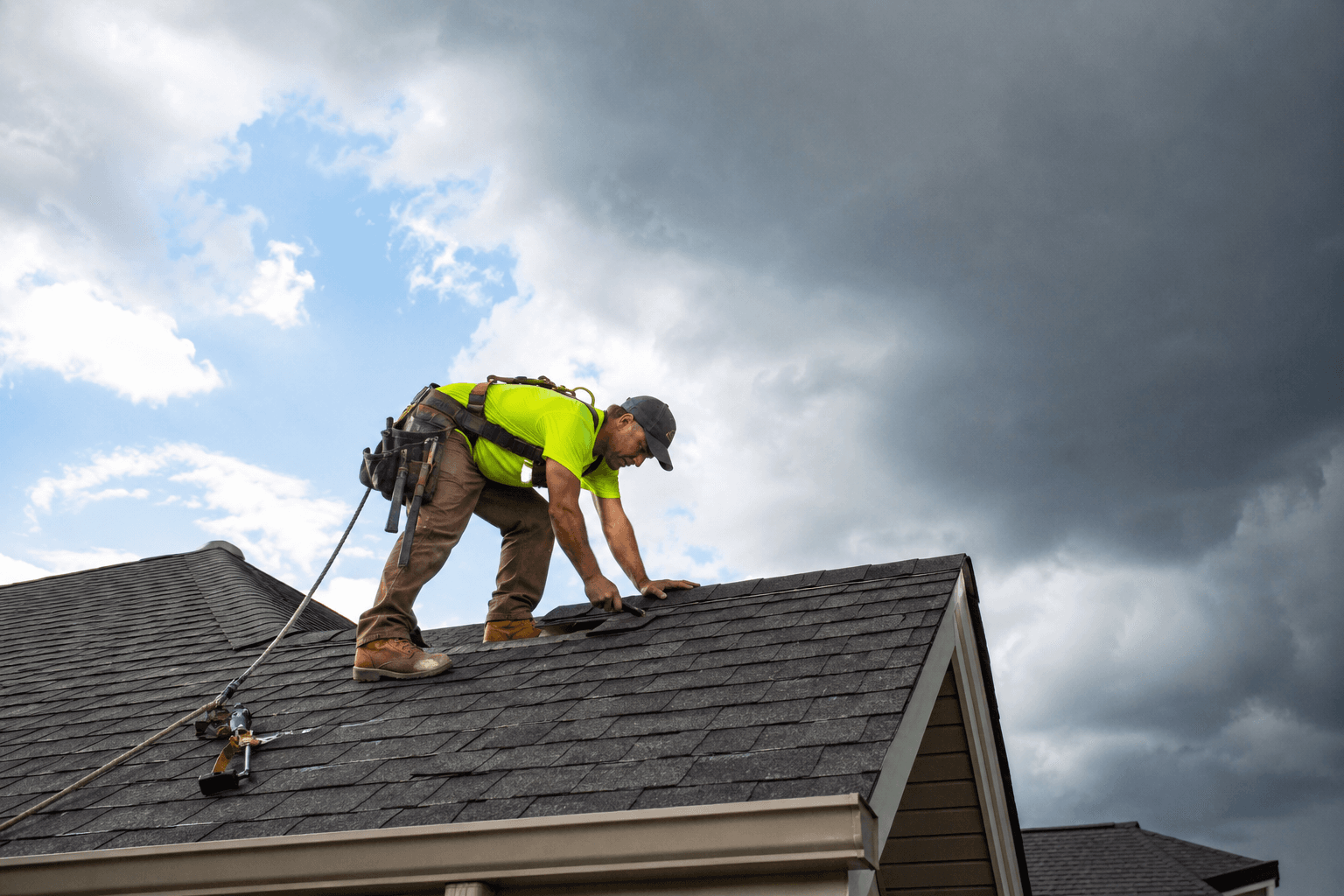
Your roof is the first line of defense, and it's the item most likely to fail expensively if you skip inspecting it. A slow leak through worn flashing can go unnoticed for months before it shows up as a stain on your ceiling — by which point you're also dealing with insulation and possibly drywall damage.
- Have a roofer inspect flashing around chimneys, skylights, and vent pipes — this is where the majority of roof leaks originate, not the field of the roof itself
- Look for curling, cracked, or missing shingles
- If your roof is past 15–20 years old (the typical lifespan of asphalt shingles) and already showing wear, this is the year to replace rather than patch — a full tear-off before storm season beats an emergency repair mid-storm every time
Not Sure If You Need a New Roof or a Repair?
Get an instant cost estimate for a full roof replacement based on your home size and roofing material.
Estimate Roof Replacement Cost →Windows
Wind-driven rain finds gaps that ordinary rain never touches. Old glazing and worn weatherstripping are the usual entry points.
- Check window glazing (the seal around the glass pane) for cracking and re-glaze if needed
- Test weatherstripping — if you can feel a draft, water can get in the same way
- If your windows are original to an older home or already showing fogging between panes (a sign the seal has failed), full replacement is worth pricing out — it solves the leak risk and pays you back on heating/cooling costs
Free Window Replacement Estimator
Enter your window count and state for a localized cost estimate — no sign-up required.
Calculate Window Replacement Cost →Gutters and Downspouts
A clogged gutter doesn't just overflow — it forces water down behind the fascia and toward your foundation instead of away from it.
- Clear debris from gutters and downspouts
- Confirm downspouts extend at least 5–10 feet from the foundation, not just dumping at the base of the house
- Secure any loose gutter sections before the first storm, not after one knocks them down
Gutters Showing Their Age?
Get a cost estimate for gutter replacement based on your home's linear footage.
Estimate Gutter Replacement Cost →Drainage and Grading
This is the cheapest item on this list and one of the most commonly ignored.
- After the next rain, walk your property and watch where water actually flows — not where you assume it flows
- Look for spots where water pools against the foundation instead of running away from it
- Regrade problem areas so the ground slopes away from the house — a rule of thumb is at least 6 inches of drop over the first 10 feet
- Clear culverts and storm drains near your property line
Planning Drainage or Grading Work?
Get a cost estimate for landscaping and drainage work based on your yard size and scope.
Estimate Landscaping & Drainage Cost →Basement and Foundation
If your grading and gutters are already sending water toward the house, your basement is where that shows up.
- Test your sump pump now — run water into the pit and confirm it kicks on and clears, not just that it's plugged in
- Check foundation walls for new or widening cracks
- If you've been putting off finishing or waterproofing a basement, factor storm timing into your schedule — waterproofing before a wet winter is far more useful than after
Basement Waterproofing or Finishing Costs
Estimate the cost of basement work based on square footage and finish level.
Estimate Basement Project Cost →Driveway and Hardscape
Small cracks in concrete or asphalt let water in, and repeated freeze-thaw cycles (common with a wetter, cooler winter in southern states that don't usually see much frozen precipitation) widen them fast.
- Seal any visible cracks before winter, not after they've spread
- Check that your driveway still slopes away from your garage and foundation
Driveway Repair or Replacement Cost
Get a cost estimate for driveway repair, resurfacing, or full replacement.
Estimate Driveway Cost →Yard and Trees
- Trim branches hanging over the roof or near windows — wind-driven rain plus overhanging limbs is a common cause of roof damage during storms
- Clear debris from around AC units and window wells so they can drain freely
Frequently Asked Questions
Is this El Niño definitely going to cause flooding where I live? No — El Niño shifts the odds, it doesn't guarantee an outcome. The Gulf Coast and Southeast have the most reliable wetter-than-average signal (showing up in over 80% of past El Niño winters). California and the Southwest are historically more variable, but the two strongest El Niños on record both caused major flooding there, and this one is forecast to be in that same strength tier.
When should I actually get this done? Now through early winter. NOAA's forecast shows the heaviest rain signal arriving January through March 2027, which means there's a real window before peak impact — but contractor schedules fill up fast once storms start, so earlier is better.
Does my homeowners insurance cover storm and flood damage? Wind and hail damage are typically covered under a standard homeowners policy. Flooding is not — that requires separate flood insurance (NFIP or private), which usually has a 30-day waiting period before it takes effect. Check your coverage now if you're in a higher-risk region.
My roof isn't leaking now — do I really need to do anything? Small problems (worn flashing, a few curling shingles) are cheap to fix now and expensive to fix once they've caused water damage inside the house. A pre-season inspection is a low-cost way to catch what you can't see from the ground.
Will this El Niño really be a record-breaker? NOAA's Climate Prediction Center currently gives it a 69% chance of reaching a three-month strength that would exceed every El Niño since 1950. Forecasts can shift, but the current outlook is unusually confident this far out.
Sources: NOAA Climate Prediction Center — ENSO Diagnostic Discussion, NOAA Climate.gov — United States El Niño Impacts
Founder of BuildCost. Combines hands-on construction and trades experience with years of managing his own home renovation projects and a data and research background that drives how BuildCost aggregates and regionalizes cost data.
More about Michael →